
The diagnosis of “diminished ovarian reserve” always comes as a shock and feels like a bolt from the blue. Just yesterday, everything seemed fine, but today your AMH levels are lower than you’d like, the ultrasound shows too few follicles, and the doctor gently suggests it’s time to act quickly.
Diminished ovarian reserve is a condition where the number and quality of eggs in the ovaries decrease more rapidly than expected for a woman’s age. While it is most commonly seen in women over 35, more and more women in their early 30s — or even as young as 25 — are being diagnosed with it.
Causes of diminished ovarian reserve
There can be several causes:
- natural depletion of the reserve with age;
- genetic factors;
- complications after gynecological surgeries;
- consequences of chemotherapy;
- hormonal imbalances that affect the stability of the ovulatory cycle.
However, regardless of the cause, the most important thing is to identify the problem in time and respond appropriately.
Diagnosis of diminished ovarian reserve
Ovarian reserve can now be assessed using several key indicators:
- AMH level (anti-Müllerian hormone): a relatively stable marker that reflects the number of follicles in the ovaries.
- FSH (follicle-stimulating hormone): if this level is elevated on days 2–3 of the menstrual cycle, it may be an early warning sign.
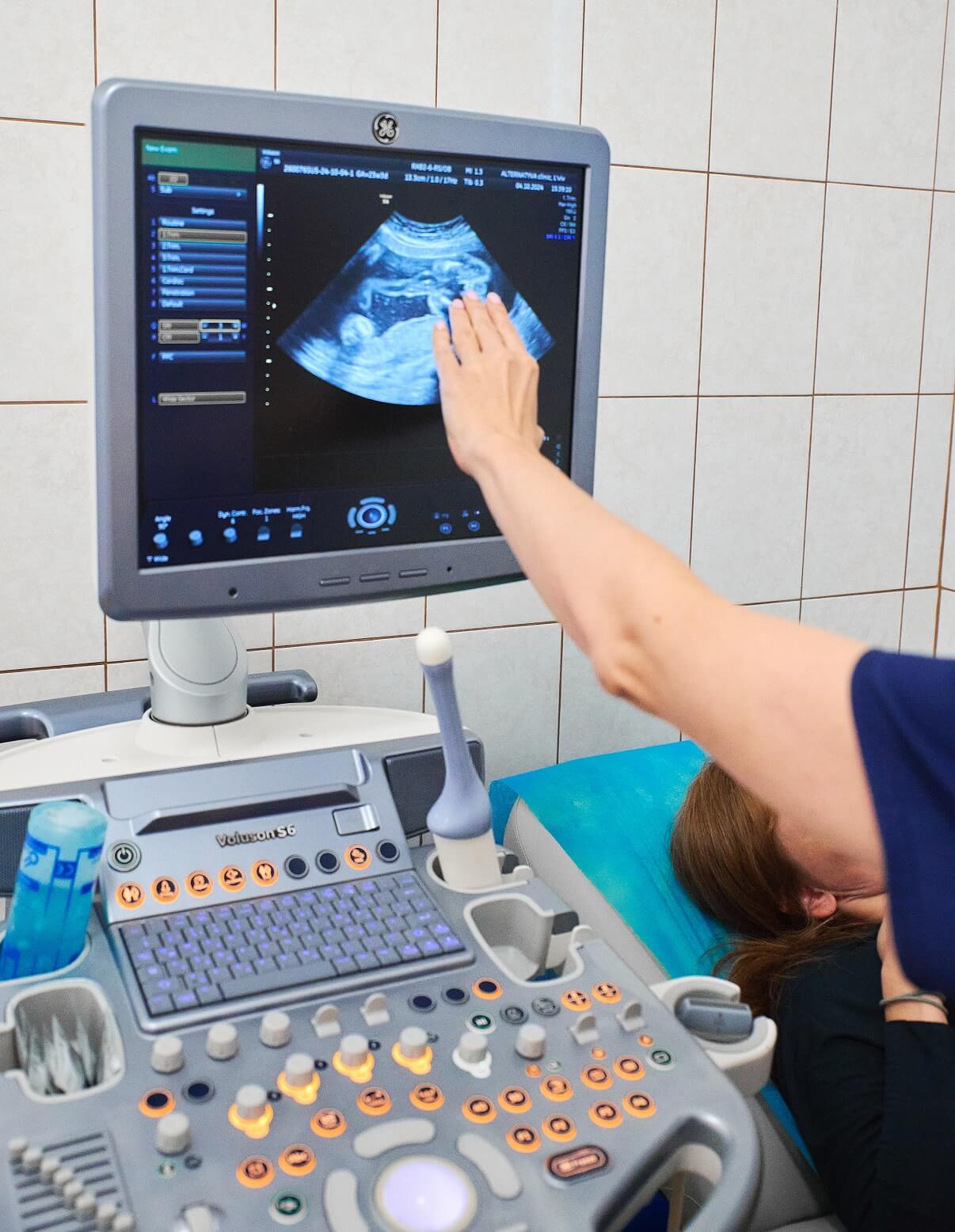
- Antral follicle count via ultrasound: the doctor can see how many active follicles are ready to grow during that cycle.
This is the basic set of tests typically recommended for women who may have a diminished ovarian reserve or who are planning a pregnancy in the near future.
IVF with diminished ovarian reserve
There is a real and often quite good chance of successful pregnancy even with a diminished ovarian reserve. While the success rate of a single IVF cycle may be lower in such cases compared to women with normal ovarian function, modern approaches significantly improve the chances of success.
At Alternatyva сlinic, we offer:
- Individualized stimulation protocols tailored to your hormonal profile;
- Embryo accumulation — collecting several high-quality embryos over multiple cycles before embryo transfer;
- Supportive medications and vitamins that help improve egg quality;
- Donor eggs, in cases where the woman’s own reserve is depleted but the desire to become a mother remains strong.
For us, every woman is a unique story, which is why treatment is always personalized — with understanding for your journey, warmth for your emotions, and respect for your choices. We don’t just prescribe a protocol; we walk beside you, attentively supporting you through the most vulnerable moments.
Remember: low AMH is not the end of your reproductive journey. It is a signal to act now — not to wait for the perfect time. If pregnancy is not your current goal, you can still preserve your eggs through cryopreservation for the future.
And if you are ready to become a mother now — don’t lose precious time. We know how to work with each cycle effectively, gently, and with the utmost care.
At Alternatyva IVF clinic, we support women every step of the way — from the first consultation to the birth of your child. If you’ve been diagnosed with diminished ovarian reserve, don’t face it alone. Come in for a consultation, and together, we will find the best path to your motherhood.